





Maintaining the legal integrity of your business entity requires ongoing vigilance, particularly when it comes to your registered agent. As your organization evolves, you may find that your current service provider or internal arrangement no longer meets your operational or privacy needs. Changing your registered agent is a standard administrative process, but it must be executed with precision to ensure that you remain in good standing with the state government.
Changing a registered agent is a standard administrative process required when a business needs to update its official point of contact with the state. To effectuate this change, a business typically must file a specific Change of Registered Agent form with the Secretary of State or update the information during the annual report filing. Before submitting the change, the business must secure a new registered agent who has a physical street address in the state and meets all legal availability requirements. Keeping registered agent details current prevents missed legal notices and government correspondence, ensuring the entity stays in good standing and avoids administrative dissolution.
Understanding the Role of a Registered Agent
A registered agent serves as the official link between your business and the state. They are tasked with accepting service of process and other important legal notices. Whether you are planning to start a business or managing a mature corporation, the stability of this role is paramount. If you fail to maintain a valid agent, your company risks administrative dissolution, which can lead to the loss of limited liability protections.
When you decide to transition from one agent to another, you are essentially updating the state records to reflect a new point of contact. This process is common for companies that are undergoing rapid growth or those that have realized their initial choice of representation was not optimized for long term privacy or compliance.
Identifying the Need for a Change
Business owners often initiate a change in their registered agent for several strategic reasons. Perhaps your business has expanded into new jurisdictions, and you need a unified compliance partner. Or maybe you have outgrown the initial setup where you acted as your own agent and are now seeking to protect your home address from public records.
When you perform your annual review, you should evaluate if your current agent provides the reliability required for your specific industry. For companies in high scrutiny sectors, such as health and senior care, the stakes of missing a single legal notice are significantly higher. If your agent does not provide timely digital notifications, it may be time to pivot to a professional service.
|
Reason for Change |
Operational Risk |
Strategic Impact |
|
Privacy Concerns |
High exposure of home address |
Protection of personal data |
|
Geographic Expansion |
Complexity in multi state compliance |
Centralized oversight |
|
Service Reliability |
Frequent missed notifications |
Improved legal response time |
|
Cost Efficiency |
Hidden fees or excessive pricing |
Predictable annual budgeting |
|
Scalability |
Inability to manage multiple entities |
Streamlined administrative load |
The Mechanics of the Transition Process
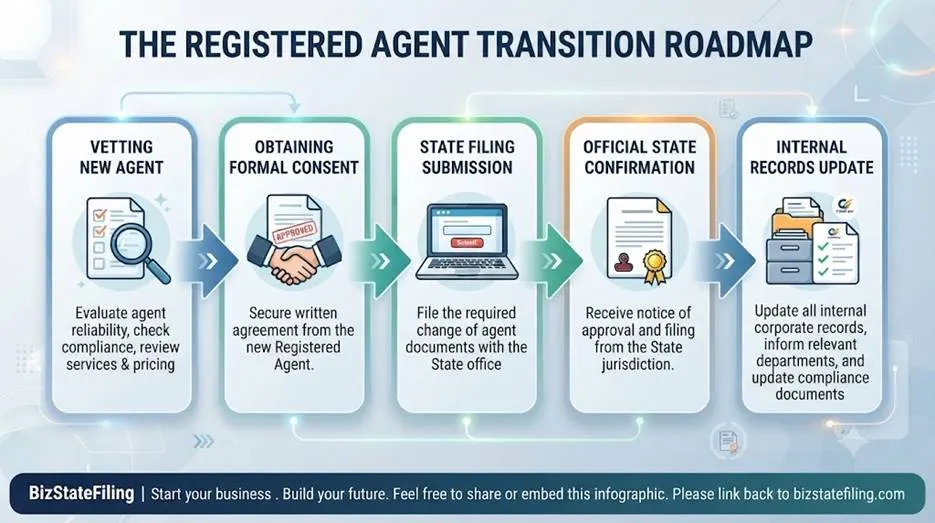
Changing your registered agent involves a specific set of actions that must be completed according to the statutes of the state where your entity is registered. The process generally follows a standard workflow, but it is critical to consult the Secretary of State or equivalent regulatory body in your jurisdiction to verify any state specific nuances.
First, you must secure an agreement with the new agent. You cannot simply name a person or company as your agent without their consent. Once you have a replacement lined up, you must prepare the formal paperwork. This typically requires filing a Change of Registered Agent form. This document acts as an official update to your formation filings.
Maintaining a clear audit trail during this period is essential. Many executives utilize a dedicated time blocker to ensuring that administrative filings are managed during focused work sessions. This helps to prevent clerical errors that might occur during a rushed or disorganized filing process.
Evaluating Professional Providers
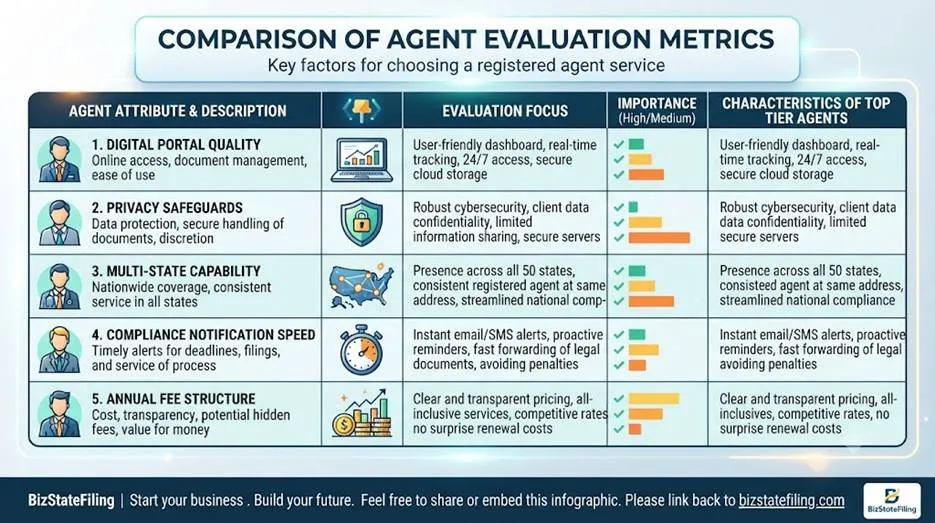
Not all registered agents are created equally. When selecting a new partner, you should prioritize providers that offer a secure digital portal for document management. The ability to access your legal filings from anywhere is a significant advantage for modern business owners. If you are handling sensitive internal documents, ensuring your compliance stack is robust is vital. You can use a professional text redactor to sanitize internal files before they are stored in your portal, maintaining data hygiene across your organization.
As you look for the best fit, perform due diligence on the service level agreement offered by potential providers. The most reliable services include proactive reminders for annual reports and other critical filing deadlines. By consolidating your compliance tasks, you reduce the probability of human error, which is the leading cause of failed service of process.
|
Evaluation Metric |
Professional Service |
DIY Self Representation |
|
Document Handling |
Automated, secure, digital |
Manual, paper based, risky |
|
Public Privacy |
Agent address used |
Personal address required |
|
Availability |
Guaranteed during business hours |
Dependent on personal schedule |
|
Compliance Support |
Proactive deadline alerts |
None or manual tracking |
|
Multi State Reach |
National network available |
Limited to local capacity |
|
Cost Structure |
Predictable annual fee |
Hidden time and risk costs |
Financial Impact and Risk Management
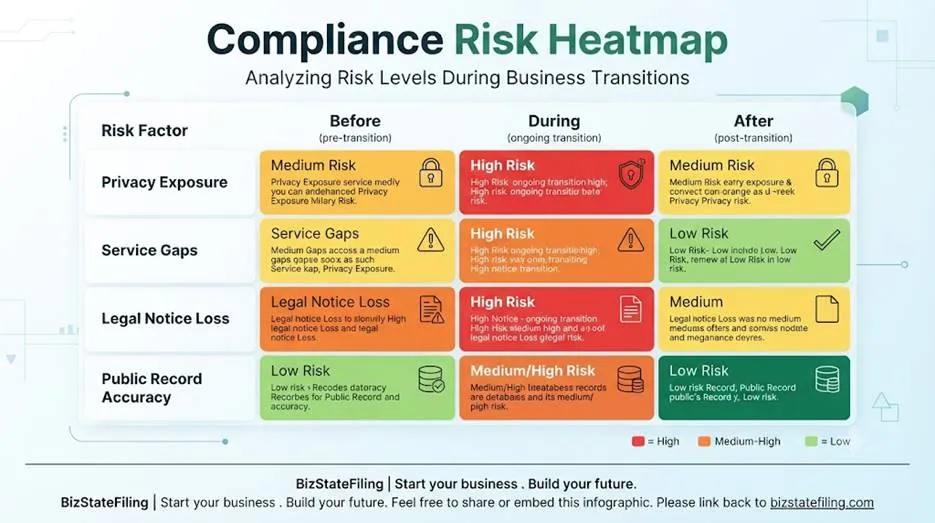
The cost of a registered agent service is a small annual investment when compared to the potential costs of noncompliance. If a failure in your representation leads to a default judgment against your company, the financial implications will far outweigh the price of a professional service. You should include these costs in your yearly audit to calculate business break even points accurately.
Furthermore, if you are looking to buy a business, the compliance history of the entity is a critical component of the valuation process. A history of frequent changes missed filings, or administrative warnings can be a major red flag for potential buyers or investors. By maintaining a clean and consistent record of your agent's representation, you demonstrate that you are managing your entity with professionalism and foresight.
Scaling Compliance Across Jurisdictions
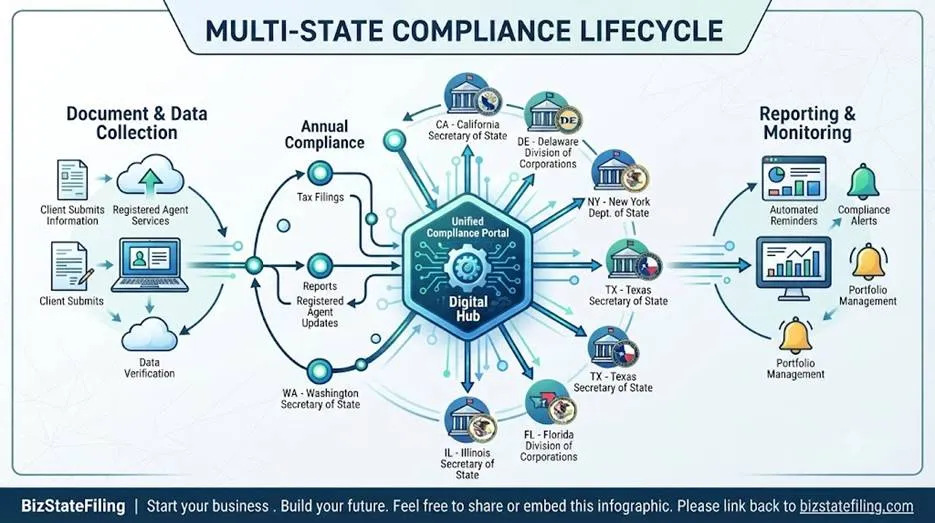
If your business is growing nationally, you will likely need to register as a foreign entity in multiple states. Each state will require its own registered agent. Managing this internally across five or ten states is an administrative nightmare. A professional agent provider with a national network offers a unified dashboard, allowing you to track all your filings in one place.
This is particularly relevant for businesses that are using a franchise guide to expand their footprint. As you add more locations and entities, the complexity of your compliance stack increases. Centralizing your agent services is a hallmark of an established, low risk organization. It allows you to shift your focus from administrative maintenance to growth strategies, such as entering new markets or scaling your operations in best cities for business.
Ensuring Data Integrity During Changes
When you change your agent, you are handling a transfer of responsibilities that include sensitive legal documentation. It is essential to ensure that your outgoing agent acknowledges the change and that your incoming agent is prepared to take over the flow of mail immediately. There should be no gap in coverage where your business is effectively unreachable.
If you are currently evaluating your internal administrative procedures, it is a good time to ensure that your filing cabinet, both physical and digital, is in order. Using an address cleaner or similar tool can help you maintain accurate records across your contact databases as you transition your official business address or agent contact information.
|
Transition Phase |
Focus Area |
Action Required |
|
Selection |
vetting new provider |
Confirm services and pricing |
|
Approval |
Obtaining agent consent |
Written agreement from agent |
|
Filing |
Submitting state forms |
Official Secretary of State filing |
|
Verification |
Confirmation from state |
Verify entity status update |
|
Integration |
Updating internal records |
Sync new details in all systems |
|
Monitoring |
Receiving first notices |
Ensure new portal is active |
Industry Specific Nuances
Different industries have different compliance requirements that influence how you manage your registered agent. For example, a business in the accounting and finances sector must ensure that all their documentation handling meets strict industry standards for confidentiality and auditing. Similarly, any company handling government contracts or operating in the public sector needs a bulletproof record of their registered agent status to maintain eligibility for bids.
If you are uncertain about the specific needs of your industry, consult with your legal counsel or use a reputable business guide to ensure that your agent transition aligns with your regulatory landscape.
Conclusion
Changing your registered agent is a strategic move that reflects the maturity and growth of your business. By taking the time to select a professional provider and following the correct legal procedures for filing your updates, you protect your company from unnecessary risks. A well managed registered agent setup is a quiet but powerful foundation for your long term success.
Frequently Asked Questions
1. Can I change my registered agent at any time?
Yes, most states allow you to change your registered agent at any time by filing the appropriate form with the Secretary of State.
2. Does the state notify my old agent when I change?
The Secretary of State typically processes the change, and it is standard practice for them to notify the registered agent of record, but you should personally confirm the transition with your outgoing agent.
3. Is there a fee to change my registered agent?
Yes, most states charge a filing fee for processing the Change of Registered Agent form, which varies by jurisdiction.
4. Do I need to update my formation documents?
Usually, you do not need to rewrite your entire Articles of Organization; filing a specific Change of Registered Agent or similar update form is sufficient.
5. What if my new agent does not sign the form?
Many states require the new agent to sign or provide a statement of acceptance to confirm they are aware of and agree to the appointment.
6. Can I use a PO Box as an address for a new agent?
No, state laws universally require a physical street address for a registered agent to ensure a process server can deliver documents.
7. How long does the change take to process?
Processing times depend on the state and whether you file online or by mail, typically ranging from a few days to several weeks.
8. Should I notify my bank about the change?
Yes, you should keep your banking and professional contacts updated with your latest business contact information to ensure all correspondence reaches you.
9. What happens if I fail to file the change correctly?
If the filing is rejected or incomplete, your old agent may remain on file, or the business may be marked as failing to maintain an agent, which carries compliance risks.
10. Are there advantages to using a national registered agent service?
Yes, national services offer standardized digital portals, consistent service across multiple states, and a unified audit trail for all your legal entities.
 Perplexity
 Claude
 Grok
Grok