





This guide explains everything business owners need to know about obtaining an Employer Identification Number (EIN) from the IRS. It covers what an EIN is, why it is required, who needs one, and how to apply for free without falling for third-party filing scams.
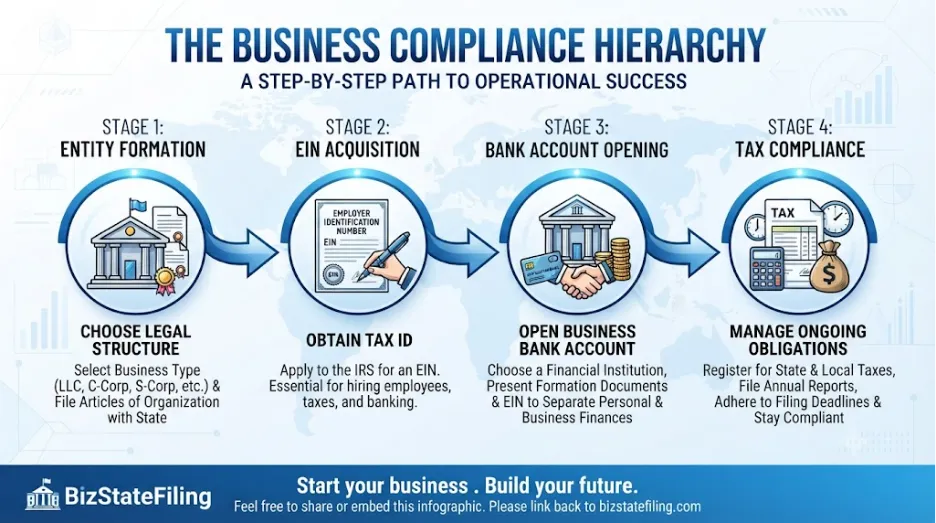
Securing an Employer Identification Number (EIN) is a fundamental milestone for any business entityoperatingwithin the United States. Often referred to as a Federal Tax Identification Number, the EIN serves as a unique nine-digit code assigned by the Internal Revenue Service (IRS) toidentifya business entity for tax administration purposes. Think of it as a Social Security Number for your company. Understanding how to obtain this number and when it isrequiredis essential formaintainingtax compliance and operational legitimacy. As you prepare to start a business in USA , the EIN becomes the backbone of your financial identity.
The Significance of the Federal Tax Identification Number
For most entrepreneurs who decide to launch an enterprise, the EIN is not merely a bureaucratic requirement; it is a vital tool forestablishingfinancial credibility. Whether you are a sole proprietor looking to scale, a partnership, or a corporation, the EIN is the key to unlocking essential financial services. Without it, you cannot open a business bank account, file federal taxes, or hire employees.
When you formalize your entity, such as when you begin the process to start LLC , the IRSutilizesthis number to track your business income and tax obligations. Furthermore, for those who choose to buy a business ,verifythe status of the existing EIN or applying for a new one is a critical part of the due diligence process. If you are navigating the complexities of corporate structures, you might find that an entity type like a US C Corp requires this identifierimmediatelyupon formation tofacilitatepayroll and tax filings.
DeterminingYour Eligibility for an EIN
Not every business structure requires an EIN, but the vast majority of commercial entities benefit significantly from having one.Yougenerally needan EIN if you answer yes to any of the following questions: Do you have employees? Do youoperateyour business as a corporation or a partnership? Do you file any tax returns for employment,excise, or alcohol, tobacco, and firearms? Do you withhold taxes on income, other than wages, paid to a non-resident alien?
If you are a sole proprietor, you might be able tooperateusing your personal Social Security Number. However, even if youare not strictly required tohave one, obtaining an EIN can protect your personal information from identity theft and simplify the process ofestablishingbusiness credit. As you grow, using business guides helps ensure you stay on top of all requirements.
|
Business Entity Type |
EIN Requirement |
Strategic Necessity |
|
Sole Proprietorship |
Optional |
Recommended for credit |
|
Partnership |
Mandatory |
Essential for tax filing |
|
Corporation |
Mandatory |
Essential for payroll |
|
Limited Liability Company |
Optional (usually) |
Recommended for banking |
|
Non-Profit Organization |
Mandatory |
Required for exemption |
|
Estate/Trust |
Conditional |
Required for tax reporting |
Step-by-Step Guide to the Application Process
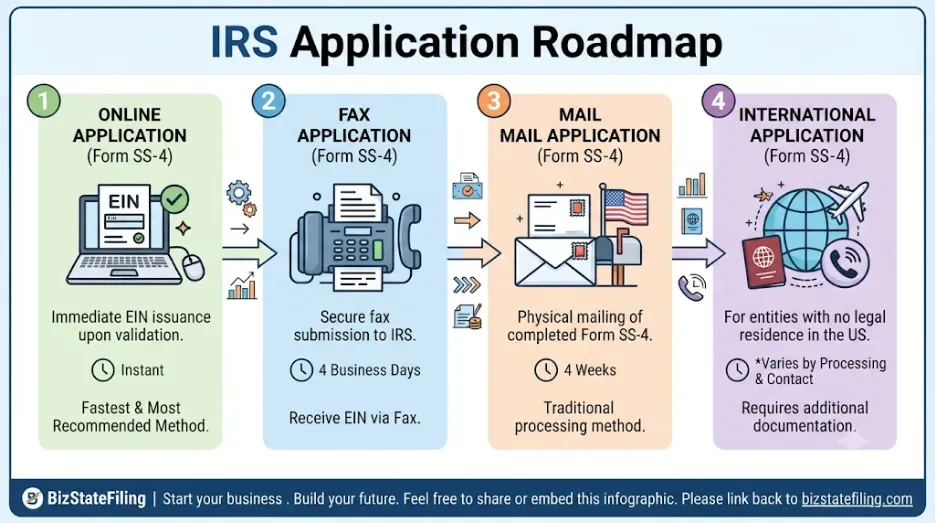
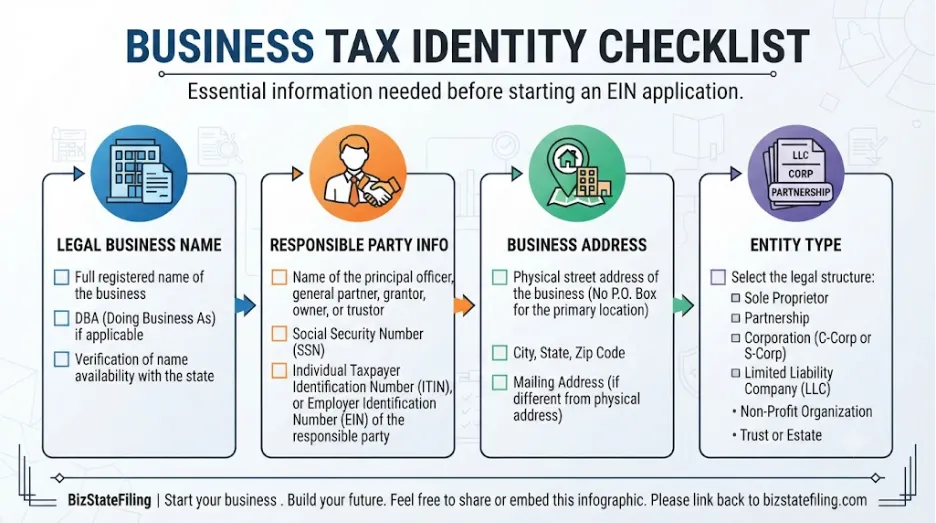
The application process for an EIN has been streamlined significantly by the IRS. There are several ways to apply, but the online method is the most efficient. Before you begin, gather your documentation. You will need your legal business name, the address of your business, and the name and taxpayer identification number of the responsible party.
The online application is available on the official IRS website. Once you complete the necessary forms, the system validates the information in real time and issues the EINimmediately. This allows you toproceedwith your business registration without unnecessary delays. For those who need tomaintaina strict compliance calendar , having this number early is crucial for meetingsubsequentfiling deadlines.
Essential Information for the IRS Application
When filling out your application, accuracy is paramount. Even a minor discrepancy in your business name or address can lead to complications with the IRS database. Ensure your legal name matches exactly what is recorded on your Articles of Organization or other formation documents.
If you are looking for guidance on specific state requirements, such as how to manage an annual report , consider using resources from a forms library . This ensures that the information you provide to the IRS is consistent with the information you file with state authorities.Maintainingthis consistency is a core pillar of business compliance.
|
Documentation Checklist |
Importance Level |
Purpose |
|
Legal Entity Name |
Critical |
Primary identification |
|
Responsible Party SSN |
Critical |
Identity verification |
|
Physical Address |
High |
Taxjurisdiction |
|
Entity Structure Type |
High |
Determiningtax category |
|
Primary Business Activity |
Medium |
Industry classification |
|
Date of Commencement |
Medium |
Timeline reporting |
Managing Your Business Tax Identity
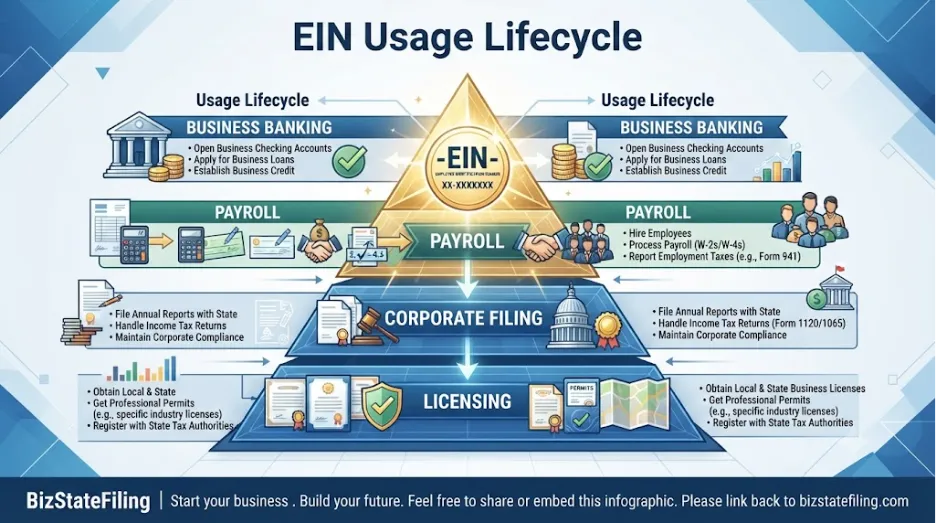
Once you have your EIN, it becomes a permanent part of your business profile. It is the number you will use to file your income tax returns, make federal tax deposits, and handle payroll taxes. If you are preparing to hire staff, you will also need to provide your EIN to your payroll provider and employees for their W-2 forms.
For businesses engaged in specific sectors, such as trucking business or real estate business , your EIN is oftenrequiredfor secondary permits and licenses. If you are checking your business license requirements , you will find that the EIN is a prerequisite foralmost everyprofessional license application.
Financial Planning and Tax Compliance
Having an EIN does not just simplify your life; it acts as a gateway to better financial planning. You can use this number to track your business expenses more effectively and separate them from your personal finances. When you use tools for subscription analyzer , you can tag your business expenses to your EIN to keep your accounting clean.
For those planning to scale, such as through a franchise opportunity , having a clean tax identity is mandatory. You cannot apply for a franchise permit or a business loan without proving your tax status. Proactive founders use these financial tools to manage their startup costs and ensure they are ready for growth.
Protecting Your Business Identity
Just as your personal Social Security Number is sensitive, your EIN should be protected. While it is a public identifier, it can be used maliciously if it falls into the wrong hands. Ensure that your internal data storage is secure. Many businesses use a text redactor to protect sensitive documents before sharing them with third parties.
If you are concerned about your business data, performing a regular audit can help youidentifyany potential vulnerabilities in your tax documentation. A strong compliance culture starts with how you handle your most basic identifiers.
Integrating EIN with Business Operations
Your EIN should be integrated into every aspect of your financial operations. From your accounting software to your banking applications, this number should be the common denominator. This consistency makes it much easier to generate reports andmonitoryour break-even point.
If you find that your business operations are becoming overly complex, you mightbenefitfrom using time blocker to allocate specific periods for tax and compliance management. This prevents the administrative clutter that often happens when you neglect your financial administrative duties.
Frequent Challenges and How to Solve Them
Many applicants face delays due to missing information or system errors. If the online application is unavailable, you can apply bymailor fax. However, these methods take significantly longer. If you are struggling with the process, consultand EIN guide troubleshootyour application status.
Another common issue is losing your EIN documentation.If this happens, you should contact the IRS Business and Specialty Tax Line.They can verify your identity and provide you with your number over the phone.
|
Common Issue |
Likely Cause |
Recommended Action |
|
Online system unavailable |
High server traffic |
Try during off-peak hours |
|
Rejected SSN/ITIN |
Name mismatch |
Verify with Social Security records |
|
Missing filing confirmation |
Technical error |
Call IRS Business line |
|
Duplicate EIN inquiry |
Multiple applications |
Contact IRSimmediately |
|
Delayed mail processing |
Postal volume |
Utilize online portal if possible |
Scaling Your Business with a Solid Foundation
As your business grows, your EIN stays with you. Even if you change your business name or move to a different state, your EINremainsthe same. This allows you to scale your business without needing to reinvent your tax identity.
Whether you are exploring business guides or looking for strategies to manage your expansion, remember that your EIN is the anchor of your professional life.Keep your records secure, your filings timely, and your compliance updated.
Frequently Asked Questions
1. Is an EINrequiredfor every business?
Not every businessis strictly required tohave one, but it is highly recommended for all entities, especially if you plan to hire employees, open a business bank account, orestablishbusiness credit.
2. Can I apply for an EIN if I do not have a Social Security Number?
Yes, a responsible party without a Social Security Number or Individual Taxpayer Identification Number can still apply for an EIN by filing Form SS-4.
3. How long does it take to get an EIN?
If you apply online, you receive your EINimmediatelyupon completing the process. Mail and fax applications can take several weeks.
4. Is there a fee to apply for an EIN?
No, the IRS does not charge a fee for issuing an EIN. If a website asks for payment to obtain your EIN, it islikely athird-party service.
5. Can I use my EIN for my personal tax returns?
No, your EIN is exclusively for your business entity. Your personal tax returns should be filed using your Social Security Number.
6. What do I do if I lose my EIN?
You can contact the IRS Business and Specialty Tax Line, and they will verify your information and provide your EIN.
7. Does my EIN expire?
No, an EIN is a permanent identifier for your business and does not expire as long as the business entity exists.
8. Can I have more than one EIN?
A business entity isgenerally onlyallowed forone EIN. If you start a new, separate business, you may need a new EIN.
9. Do I need an EIN for a home-based business?
If your home-based business is a sole proprietorship with no employees, youare not required tohave an EIN, but it can still be beneficial for your business operations.
10. Does a foreign entity need an EIN?
Yes, if a foreign entity has a U.S. filing requirement or needs to open a U.S. bank account, it will need to apply for an EIN.
 Perplexity
 Claude
 Grok
Grok