





This guide walks entrepreneurs through navigating Michigan’s business licensing framework. It covers general state requirements, industry-specific permits, local municipal licenses, and ongoing renewal obligations necessary to maintain a compliant business in Michigan.
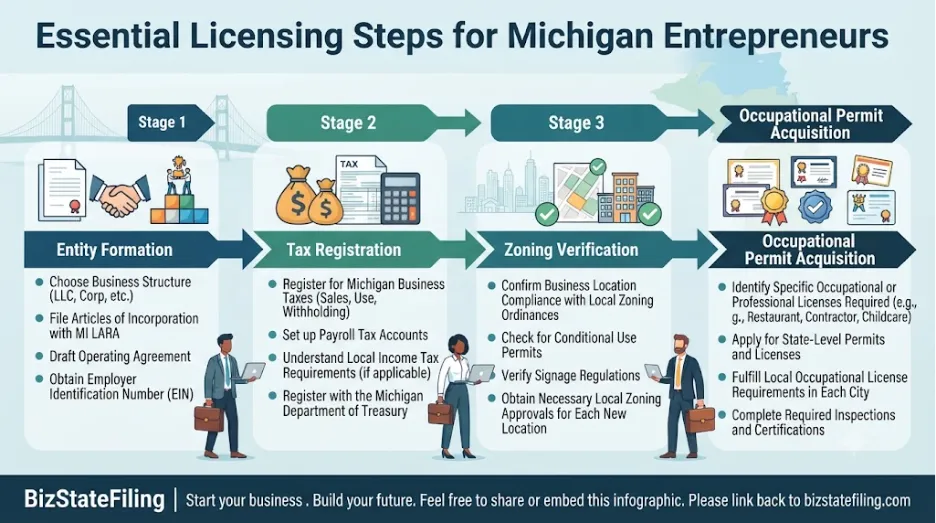
Launching a commercial enterprise in the State of Michigan is a significant undertaking that requires a sophisticated approach to regulatory compliance. Michigan does not issue a single master operating permit that covers every commercial activity. Instead, the legal environment is characterized by a decentralized framework where authority is distributed across state departments, county offices, and municipal governments. Navigating this landscape requires careful planning, from the moment you choose your legal structure to the daily management of your operational permits.
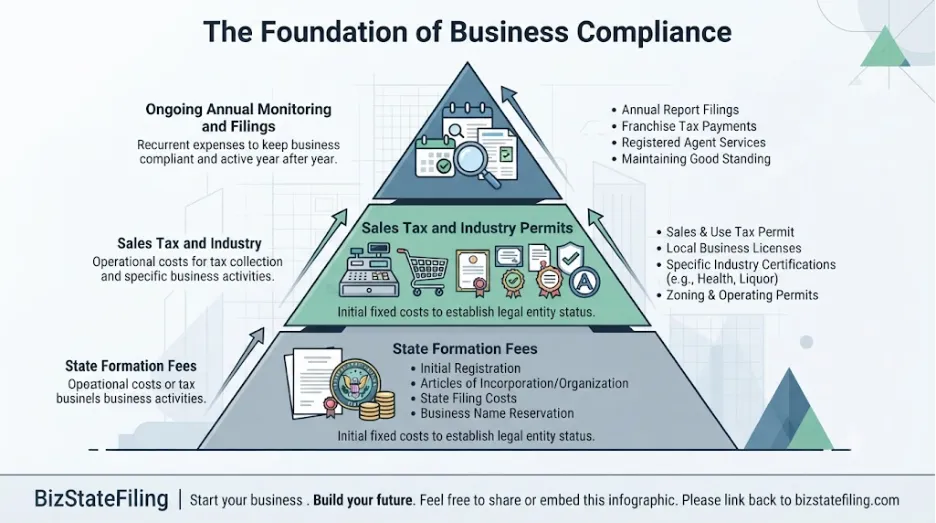
The Foundation of Michigan Business Compliance
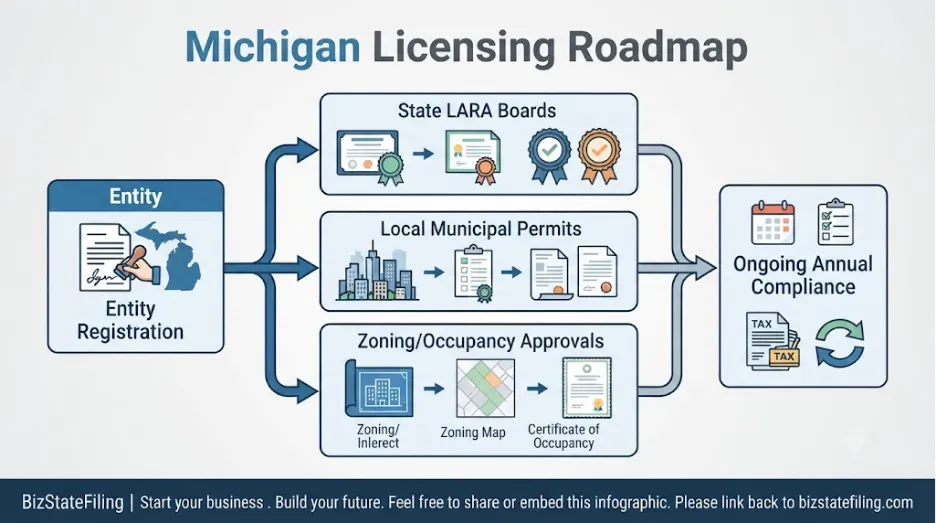
The process of starting a commercial venture in this state begins with the formal registration of your legal entity. Many entrepreneurs decide to start an LLC as their first step toestablisha clear legal boundary between personal assets and corporate liability. Once your formation documents are accepted by the state, your enterprise exists as a legal entity, but that status does not automatically grant you the authorization to open your doors to the public. You must secure authorization from localjurisdictions, which often involves obtaining a local ordinance permit or a municipal registration.
It is common for founders to assume that statelevel registration is the final requirement. However, this isonly thestarting point. Compliance in Michigan is a tiered process. State filingvalidatesyour company's structure, but professional operation oftennecessitatesspecific permits from specialized boards or departments. Utilizing a business formation platform allows founders tomaintaina centralized record of their filings, which is critical when dealing with multiple municipal and statejurisdictions.
Understanding Regulatory Jurisdictions
Regulatory oversight in Michigan is split into three primary layers. First, the state government manages broad requirements like sales tax registration, corporate reporting, and occupational licensing for specific professions through agencies like the Department of Licensing and Regulatory Affairs. Second, county governments often regulate aspects of business that impact public health or infrastructure, such as specific food handling certifications and environmental health inspections. Third, municipal governments hold the most powerregardinglocal zoning, building codes, and business usage permits.
When conducting a small business location analysis , you must account for these layers. A businessoperatingin a storefront mustcomply withcityspecific ordinances that might not apply to ahomebaseddigital consultancy.Failing to distinguishbetween thesejurisdictionsis a frequent cause of compliance delays for new startups.
Industrial Classification and Permit Requirements
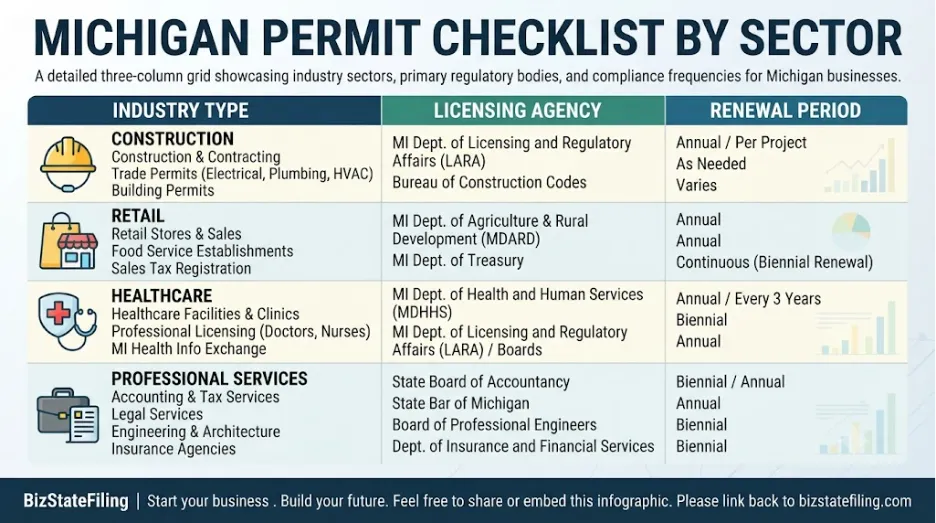
The requirements for your business depend heavily on your industry. A retail clothing store, a specialized healthcare clinic, and a construction contractor faceentirely different regulatory hurdle. Todetermineyour path, you must classify your operations accurately.
The table below provides a comprehensive look at the regulatory landscape for major industries in Michigan.
|
Industry Category |
Primary Regulatory Body |
Core Compliance Focus |
Common Permit Type |
Regulatory Frequency |
|
Professional Services |
Licensing and Regulatory Affairs |
Technical competency |
Occupational License |
Biennial |
|
Retail and Ecommerce |
Dept of Treasury |
Sales tax collection |
Sales Tax License |
Permanent |
|
Food and Beverage |
Local Health Dept |
Sanitation and safety |
Health Permit |
Annual |
|
Construction Trades |
Bureau of Construction Codes |
Building safety |
Contractor License |
Biennial |
|
Healthcare Services |
Dept of Health and Human Services |
Patient welfare |
Facility Certification |
Annual |
|
Real Estate Brokerage |
Licensing and Regulatory Affairs |
Fiduciary duty |
Broker License |
Biennial |
|
Industrial Manufacturing |
Environment, Great Lakes, and Energy |
Air and water impact |
Operational Permit |
Annual |
|
Financial Services |
Dept of Insurance and Financial Services |
Fiscal transparency |
Financial Charter |
Annual |
|
Logistics Transport |
Dept of Transportation |
Commercial safety |
Commercial Carrier |
Annual |
|
Education Training |
Dept of Education |
Accreditation standards |
Educational Permit |
Annual |
|
Hospitality Tourism |
Municipal Council |
Occupancy and safety |
Lodging Permit |
Annual |
|
Data Technology |
Secretary of State |
Privacy compliance |
Data Security Cert |
Periodic |
|
Agriculture Farming |
Dept of Agriculture and Rural Development |
Production quality |
Inspection Permit |
Biennial |
|
Media Creative |
Local Zoning Board |
Commercial broadcasting |
Usage Permit |
Periodic |
|
Automotive Repair |
Dept of State |
Repair standards |
Facility Registration |
Annual |
Strategic Approaches to Location Selection
The physical location of your business is one of the most impactful variables for your licensing roadmap. Before signing a lease, you should evaluate your destination city data to ensure the local government is friendly toward your specific industry.Some cities are more efficient than others when it comes to processing zoning variances or building inspections.
Zoning lawsfrequentlymandate what a building can be used for. If you intend to open a hightraffic retail location, you must confirm that the property is zoned for commercial use.If it is zoned for residential or office use, you will need to apply for a variance, which is atimeconsumingand costly process.You might also want to calculate your relocation expenses factor in these potential legal and administrative costs.
Financial Obligations and Compliance Overhead
Compliance costs are a recurring operational expense. Many business owners make the mistake of budgeting only for theinitialsetup. However,maintainingyour status requires ongoing financial discipline. You must account for annual reports, license renewals, and the fees associated with hiring a statutory registered agent to receive legal notifications on your behalf.
To keep your operations sustainable, you should calculate recurring software overhead to track all tools, including those used for permit management. The following table illustrates the typical financial outlays for a standard Michigan business.
|
Expense Category |
Typical Frequency |
Estimated Range |
Responsible Party |
Strategic Approach |
|
Initial Formation |
Onetime |
50 to 200 USD |
Founder |
Digital Registration |
|
Sales Tax License |
Permanent |
0 USD |
Business Owner |
Treasury Department |
|
Annual Report Filing |
Annual |
25 to 300 USD |
CPA |
Online Portal |
|
Occupational License |
Annual |
50 to 450 USD |
Licensee |
Regulatory Board |
|
Zoning Permit Fees |
Onetime |
200 to 1500 USD |
General Counsel |
City Planning |
|
Registered Agent |
Recurring |
100 to 250 USD |
Legal Liaison |
Compliance Agency |
|
Health Inspection |
Annual |
150 to 500 USD |
Facility Lead |
Local Health Dept |
|
Compliance Auditing |
Quarterly |
Variable |
Internal Auditor |
SelfAssessment |
|
Environmental Report |
Annual |
250 to 1500 USD |
Ops Manager |
Agency Submission |
|
Safety Training |
Annual |
100 to 400 USD |
HR Department |
Certified Workshop |
|
Data Insurance |
Annual |
600 to 2500 USD |
IT Lead |
Coverage Carrier |
|
Waste Management |
Monthly |
75 to 400 USD |
Operations Lead |
Vendor Contract |
|
Property Tax |
Annual |
Variable |
Property Owner |
County Assessor |
|
Liability Insurance |
Annual |
800 to 2000 USD |
Business Owner |
Brokerage Firm |
|
Software Compliance |
Monthly |
50 to 600 USD |
Operations Lead |
Subscription Audit |
Data Integrity and Compliance Hygiene
Modern compliance is notmerelypaper permits. It also involves data management. State agencies rely onaccuratecontact information to notify businesses of reporting deadlines. If your mailing address or contact person is outdated, you could miss critical notifications, leading to fines or the loss of good standing. It is highly recommended to use bulk address cleaning tools to keep your records consistent across all agency portals.
Additionally, if your business handles client information, you must adhere to state and federal privacy regulations. Using text redactor tools can help protect sensitive information from accidental disclosure. This level of technical hygiene is essential when you start an LLC and begin scaling your operational footprint.
Scaling and Expansion Strategy
Scaling in Michigan requires a new set of permits as you enter different municipalities. Each city has its own set of tax thresholds and reporting requirements. If you decide to find a business for sale as a faster way to grow, you must conduct deep due diligence on the existing licenses. An acquisition is only as valuable as the permits that come with it.
For those who want to minimize the research burden, explore franchise opportunities which oftencomeswithprevettedcompliance frameworks. Regardless of whether you build, buy, or franchise, you must use a business breakeven calculator to ensure your growth strategy is financiallyviable.
Human Capital and Regulatory Complexity
Operating a workforce in Michigan involves adherence to labor laws that cover payroll,workers'compensation, and withholding taxes. These requirements apply whether you have one employee or hundreds. To keep your administrative overhead low, you should rely on tools such as a salary to hourly conversion helper to ensure your payroll isaccurateand compliant with state standards.
Founders often find that their time is pulled in too many directions. Using visual time management utilities to block out specific hours for administrative tasks can prevent the common oversight of missing a renewal deadline.
The Value of Professional Guidance
Whileselfserviceplatforms are powerful, there are situations where they cannot replace human judgment. Disputes over zoning variances, complexmultijurisdictionaltax obligations, or unique industryspecific permits often require the intervention of a qualified CPA or local business attorney. Proactive management of your corporate records is the mark of a highgrowth company.
Frequently Asked Questions
1. Is there a single, universal business license in Michigan?
No, Michigan does not issue a general business license. You mustidentifyspecific permits based on your industry, location, and operational nature.
2. Where do I begin my registration journey?
Start by registering your entity with the Michigan Department of Licensing and Regulatory Affairs. Once you start a business in USA , you can move on to local requirements.
4. Is a Sales Tax Licenserequiredfor every business?
Not necessarily. It is primarily required for those who sell tangiblepersonal propertyor provide taxable services.
5. What is a Certificate of Occupancy?
It is a formal document from your local municipality certifying that your facility meets all building, fire, and safety codes.
6. How do Ideterminewhich professional licenses I need?
Research your specific industry board within the Department of Licensing and Regulatory Affairs for detailed certification mandates.
7. What are the consequences of missing a permit renewal?
Consequences range from monetary fines and interest accrual to temporary operational shutdowns and potential legal liability.
8. Can a registered agentassistwith ongoing compliance?
Yes. A registered agent ensures that all official correspondence from state and local authorities is received andforwardedto you promptly.
9. How does zoning impact total startup costs?
Zoning affects your physical signage, parking permits, and facility modifications. Use commercial location demographic data to estimate these costs beforefinalizinga lease.
10. How can I ensure my business is ready for future investment?
Maintain a central repository for every license, permit, and filing. Investors look for firms thatmaintainclean, transparent records.
-
Are there tools to help manage recurring costs and filings?
Yes. Many entrepreneurs use subscription analyzer and burn rate tools to track their software and operational expenses, ensuring theyremainlean as they scale.
 Perplexity
 Claude
 Grok
Grok